
VeriFactu: Understanding the New Invoicing Obligation in Spain
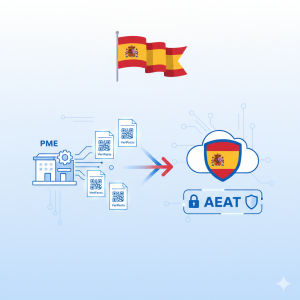 As part of the fight against tax fraud, Spain has introduced VeriFactu, a new electronic invoicing regulation requiring all companies and professionals using IT invoicing systems to comply. This reform ensures traceability, authenticity, and integrity of electronic invoices, facilitating control by the Spanish Tax Agency (AEAT). SMEs must quickly adapt to avoid penalties.
What is VeriFactu and the SIF?
Origin of the Reform (AEAT, Ley Crea y Crece)
VeriFactu stems from Law 11/2021 and Royal Decree 1007/2023, strengthening anti-fraud efforts by enforcing compliant IT invoicing systems. The Invoicing IT System (SIF) is the technical platform validating invoices under legal conditions.Key Objectives and Principles
It ensures the generation of tamper-proof records for each invoice emitted, guaranteeing integrity and secure storage to detect fraud or illicit modifying attempts.Who is Covered and When?
2025-2026 Implementation Timeline
- January 1st, 2026: companies subject to corporate tax.
- July 1st, 2026: self-employed and other entities.
Categories of Affected Businesses
All entities using IT invoicing systems, except those already under Immediate Supply of Information (SII) regulations.SME Considerations
Verifying software compliance and planning updates or changes in advance is essential to meet requirements.Impacts and Operational Solutions for SMEs
Organizational and Process Impact
The regulation requires advanced digitization and strict governance of tax data, integrating accounting systems with tax platforms.Two-Week Compliance Checklist
- Verify invoicing software conformity
- Obtain responsible declaration from provider
- Test data exchanges with AEAT platform
- Train relevant staff
- Plan incident and anomaly management
Choosing Technical Solutions
Certified providers such as EDICOM or Fiskaly are recommended. Deunite supports seamless integration.SME Case Study
A distribution SME successfully adopted Fiskaly in 2025, avoiding penalties and streamlining accounting processes.Costs, ROI, and Deunite Support
Budget Estimation and Returns
Includes training, updates, and consultancy, improving fiscal security and operational efficiency.Audit and Personalized Diagnostic Offer
Deunite offers audits to evaluate VeriFactu compliance and optimize Salesforce data flows.Conclusion
VeriFactu is a transformative regulation for invoicing in Spain, particularly for SMEs. Early preparation with Deunite ensures compliance and efficiency.FAQ
What are the penalties for non-compliance?
Non-compliance may lead to heavy financial penalties, up to €50,000 per year or a percentage of undeclared turnover. The Spanish Tax Agency will perform easier and real-time audits via the electronic transmission.
How can SMEs prepare effectively?
Choose certified invoicing software, train relevant staff, and request an external audit to ensure each step is completed by the stated deadlines.
Key differences with e-invoicing in France?
In Spain, VeriFactu means invoices are transmitted to the tax agency (AEAT) nearly in real-time, while in France reporting is done periodically via Chorus Pro. Technical standards and timeline vary by country.
What are the key deadlines?
Enterprises: until January 1st, 2026. Self-employed/others: until July 1st, 2026. Providers must be ready from July 2025.